

What the UK–US Economic Prosperity Deal Could Mean for FDA-Approved ANDA Holders
What the EPD changes
The EPD is a strategic and commercial signal. It has renewed attention on the operating environment for pharmaceutical companies considering business between the United States and the United Kingdom.
That signal matters because portfolio decisions are rarely permanent. Commercial assumptions change, competitive environments evolve and strategic priorities shift. A product screened out under one set of policy, pricing, supply-chain or market-access assumptions may warrant another look when those assumptions begin to change.
The EPD therefore creates a useful decision point: should selected FDA-approved sterile injectable assets be reassessed for UK commercial potential?
What the EPD does not change
The EPD should not be treated as a regulatory shortcut.
FDA approval does not automatically enable UK commercialisation. UK market entry still requires a structured assessment of the product’s regulatory position, supporting dossier, manufacturing arrangements, supply chain, commercial opportunity and route to market.
Nor does a more favourable commercial signal make every product attractive. Market size, competition, pricing, development requirements, supply economics and execution risk remain product-specific. A general policy development cannot replace evidence about an individual asset.
Why FDA-approved ANDA holders should still pay attention
Many portfolios of FDA-approved sterile injectable products contain assets that have not been assessed recently for UK or European potential. Some were screened out when the expected investment, route to market or commercial return appeared unattractive. Others may never have received a formal commercial review because the US market remained the immediate priority.
The EPD provides a reason to revisit those earlier assumptions—but selectively.
A sensible reassessment would focus on products where there is enough evidence to justify further work. The aim is not to start regulatory activity. It is to identify which assets, if any, deserve a deeper Commercialisation Readiness Assessment before significant expenditure is committed.
Reassess the portfolio before committing to a programme
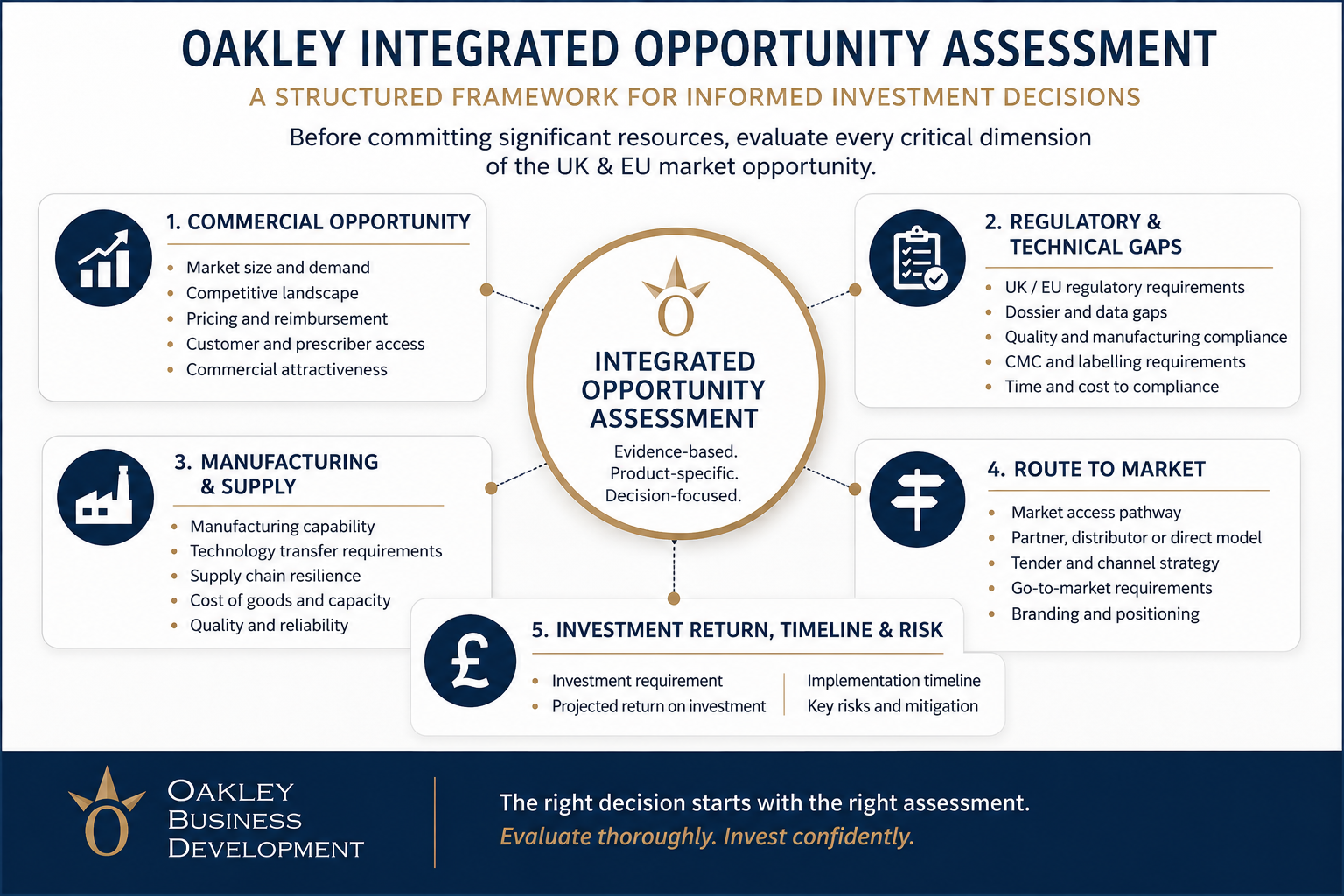
Senior teams can begin with five practical questions:
Is there a credible UK commercial opportunity for this product?
What regulatory and technical gaps exist between the FDA-approved ANDA and UK requirements?
Can the product be manufactured, transferred and supplied on commercially workable terms?
What route to market is most appropriate?
Do the likely return, timeline and risks justify further investment?
These questions help distinguish a politically interesting development from a commercially actionable opportunity.
They also reduce the risk of beginning with the wrong question. “Can this product enter the UK?” is not enough. The better starting point is: “Should we invest in taking this product further?”
Why commercial due diligence remains the first step
Regulatory planning remains essential—but only after management has established that the commercial opportunity justifies further investment.
Early commercial due diligence helps management test the opportunity before committing major resources. It brings together the drug product, commercial opportunity, regulatory position, manufacturing considerations and route to market in one evidence-based assessment.
The result should be an informed go/no-go recommendation—not a guarantee of approval or commercial success.
The Oakley Due Diligence Report
The Oakley Due Diligence Report is an independent Commercialisation Readiness Assessment designed specifically for FDA-approved sterile injectable products considering UK and EU market entry.
It is designed to help senior management:
evaluate the commercial opportunity;
identify regulatory and technical gaps;
understand manufacturing and supply implications;
assess routes to market;
estimate the likely timeline, cost and principal risks; and
make an informed investment decision before significant expenditure.
Not every FDA-approved ANDA will justify UK or EU market entry. The purpose of the assessment is to identify the products that merit further investment—and provide the evidence to stop where the commercial case is insufficient.
From Political Signal to Commercial Decision
The EPD does not turn US approval into UK market access. It does, however, provide a timely reason to review selected assets against current commercial and strategic assumptions.
For companies holding FDA-approved sterile injectable ANDAs, a disciplined portfolio reassessment can establish whether any products now deserve closer examination. Where the initial case is credible, an independent Commercialisation Readiness Assessment provides the evidence needed for the next decision.
Could Selected Products in Your Portfolio Merit Reassessment?
If your organisation holds FDA-approved sterile injectable ANDAs and is reviewing international growth opportunities, the Oakley Due Diligence Report provides an independent Commercialisation Readiness Assessment to help determine whether selected products justify further investment.
Primary action: Explore the Oakley Due Diligence Report
Secondary action: Arrange a confidential Discovery Meeting.