

Why the UK May Deserve a Second Look for Selected FDA-Approved ANDAs
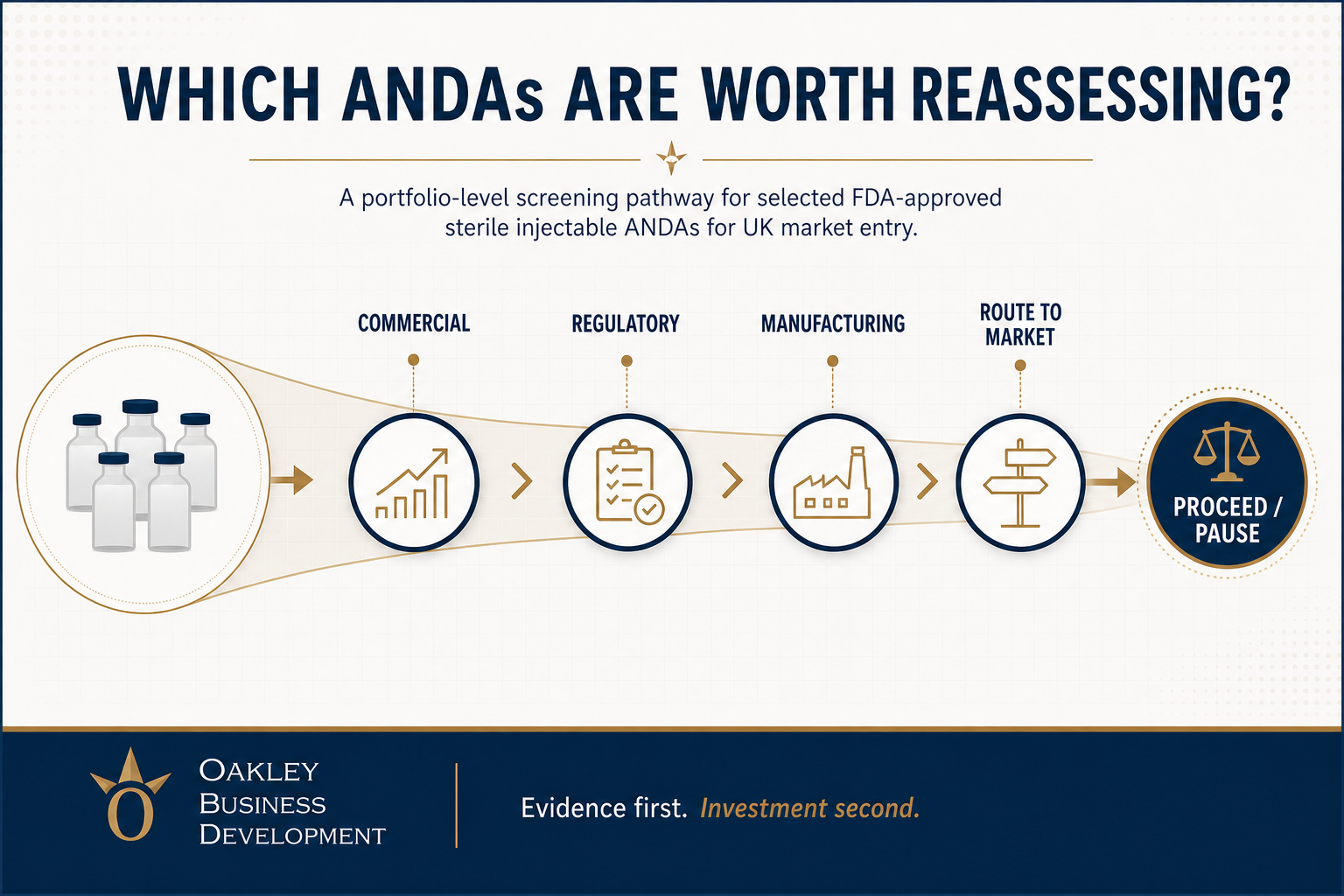
The UK–US Economic Prosperity Deal has created a reason for some US pharmaceutical companies to revisit assumptions about the UK market. It has not removed the need for careful product-specific assessment, and FDA approval does not automatically create a viable route to UK commercialisation. But for companies holding FDA-approved sterile injectable ANDAs, the commercial question may now merit a fresh look.
Start with the portfolio, not the filing route
The first question is not simply whether a product could be submitted. It is whether the opportunity is strong enough to justify the investment required to enter and compete.
A useful first screen should consider:
the size, stability and accessibility of the UK opportunity
the current and expected competitive landscape
likely pricing, margin and supply-chain implications
the regulatory position and evidence requirements
manufacturing readiness and any product-specific technical constraints; and
the practical route to market.
This portfolio-level screen helps distinguish products that warrant deeper investigation from those where the likely return does not support further expenditure.
Changed conditions do not remove product-specific risk
The EPD should be treated as a potential commercial signal rather than a regulatory shortcut. Each product still needs an evidence-based review of its commercial, regulatory, manufacturing and route-to-market position.
That distinction matters. An FDA-approved ANDA may represent a technically established product, but its UK prospects will depend on factors that are specific to the product and the market. A broad policy development cannot answer whether demand is sufficient, competition is manageable, supply is practical or the required investment is proportionate to the expected return.
Commercial due diligence should come first
Regulatory planning can absorb significant time and resources. Before committing to that work, companies should understand whether the commercial case is credible and which uncertainties could change the investment decision.
An independent Commercialisation Readiness Assessment can bring the relevant considerations together: the drug product, commercial opportunity, regulatory position, manufacturing implications and route to market. The objective is not to guarantee entry. It is to provide an evidence-based recommendation on whether a selected opportunity should proceed to the next stage.
A practical next step
For portfolio owners, the immediate task is to identify which FDA-approved sterile injectable products are now worth reassessing—and which are not.
Oakley Business Development's Due Diligence Report provides an independent, product-specific Commercialisation Readiness Assessment to support that decision before major expenditure is committed.
Call to action: Review the Oakley Due Diligence Report and arrange a Discovery Meeting to discuss a selected product. https://www.oakleybd.com/oakley-due-diligence-report